Advanced Python for MLOps

Advanced Track · MLOps Specialization

Advanced Track · MLOps Specialization

You know Python. You can write scripts, build pipelines, and read ML codebases. But senior MLOps engineers write Python differently – decorators, concurrency, production serialization, ML APIs, plugin architectures. This course is where foundational Python ends and production-grade MLOps Python begins.

  • Apply advanced Python patterns – decorators, magic methods, dynamic imports – used in real MLOps platforms
  • Handle concurrency, parallelism, and subprocess management in ML pipeline contexts
  • Build and expose ML models through production-ready Flask and FastAPI services
  • Work with efficient serialization formats – Parquet, HDF5, and advanced logging handlers
  • Integrate with Cloud SDKs, Docker, Kubernetes, and ML platform APIs from Python code
Enroll Now One-time payment · € 129,00 · 2 years access with extension available
🎬
31 Lectures2+ Hours of Video
💻
Dedicated GitHub ProjectProduction-style Python code
🏆
Certificate of CompletionShareable on LinkedIn & CV
💬
Lesson-level Q&AEnglish Subtitles
🧑‍💻
Senior / Lead levelAdvanced Track · MLOps Specialization

Sound familiar?

You write Python every day, but not the way senior MLOps engineers do.

Most MLOps engineers reach a level where their Python works, but it doesn’t scale, doesn’t compose well, and doesn’t look like what senior engineers write in production platforms. The gap between “Python that runs” and “Python that belongs in a production ML system” is wider than most people realise.

🔄
“I can’t make my pipelines run in parallel without race conditions.”
Threading, multiprocessing, and async concurrency in Python are not the same thing and are not interchangeable. Production ML pipelines use all three in different contexts. Getting it wrong causes deadlocks, data corruption, and unpredictable failures at scale.
🔌
“I can call the MLflow API but I don’t understand how to build my own.”
Senior MLOps engineers build internal tools, services, and ML platform integrations – not just consume them. FastAPI and Flask serve ML models. Plugin architectures extend platforms. Dynamic imports wire components together at runtime. These are standard tools in senior-level Python work.
📁
“My code works but it doesn’t look like the codebase around it.”
Decorators, magic methods, packaging, and proper dependency declarations are not advanced topics in senior engineering – they’re baseline expectations. If your Python stops at functions and classes, you’re writing in a dialect that production codebases have moved past.
This course bridges exactly that gap. Advanced Python for MLOps covers the Python patterns that appear in production ML platforms, internal tooling, and senior-level code reviews – explained through real MLOps contexts so you can apply them immediately to actual systems.

What makes this different

Not more Python syntax.
The Python patterns senior engineers actually use.

This course doesn’t re-teach Python. It covers the advanced features and architecture patterns that appear in production MLOps codebases – written for engineers who already know the language and want to use it at a professional level.

✓

MLOps context for every advanced topic

Decorators explained through middleware patterns used in ML serving frameworks. Concurrency explained through ML pipeline parallelism. FastAPI explained through the lens of a model serving endpoint. Every advanced topic is grounded in the context where you’ll actually use it.

✓

Covers the topics that promote engineers to senior level

Concurrency, packaging, plugin architectures, ML API design, and production serialization are the skills that distinguish mid-level from senior MLOps engineers. These are not mentioned in foundational Python courses but appear in every senior job description.

✓

Builds ML APIs from scratch – Flask and FastAPI

You’ll build a real ML serving endpoint using both Flask and FastAPI, covering API design patterns, best practices, and how to structure an ML API for production deployment. This is a complete end-to-end module, not a surface-level overview.

✓

Cloud SDK, Docker, Kubernetes, and MLflow from Python

The External Libraries module covers how to call AWS, GCP, and Azure APIs from Python, how to use the Docker and Kubernetes Python SDKs, and how to integrate with ML platform APIs like MLflow – the integrations that production MLOps code is full of.

✓

Efficient data formats – Parquet, HDF5, and beyond

Production ML systems don’t use CSV. This course covers the serialization formats that large-scale ML systems rely on – Parquet and HDF5 – along with best practices for reading, writing, and managing large datasets efficiently in Python.

✓

Designed specifically for experienced engineers

No time spent re-explaining basic syntax, data types, or control flow. This course starts where Python for MLOps ends – at the level where engineers who already know the language want to write production-grade code that belongs in senior-level codebases.

❌ Intermediate Python courses

—Re-teach fundamentals to reach a broader audience
—General web or data science focus
—Skip concurrency, plugin patterns, packaging entirely
—No ML API module, no ML platform SDK coverage

✓ Advanced Python for MLOps

→Starts at the level where Python for MLOps ends
→Every topic taught through an MLOps production lens
→Full modules on concurrency, packaging, plugin architecture
→Complete Flask + FastAPI ML API module

Learning outcomes

By the end of this course, you’ll be able to:

Six senior-level Python skills that appear in production MLOps codebases, and in the job descriptions of Senior and Lead MLOps Engineers.

🏗️ Architecture Patterns
✓
Use advanced Python patterns – decorators, magic methods, dynamic imports – the way senior engineers use them in MLOps platforms
Read and write code that uses the advanced language features you see in real MLOps codebases but never learned how to write yourself.
⚡ Concurrency
✓
Handle concurrency and parallelism correctly – threading, multiprocessing, subprocess, and synchronized queues in ML pipeline contexts
Know which concurrency model to use for which problem, and avoid the race conditions, deadlocks, and resource leaks that break ML pipelines at scale.
🌐 ML APIs
✓
Build production ML APIs using Flask and FastAPI – from a basic endpoint to a properly structured model serving service
Build and deploy a complete ML serving API with proper structure, error handling, and API design patterns – the kind of service production MLOps teams maintain.
💾 Serialization
✓
Work with production-grade data formats – Parquet, HDF5, memory-mapped files – for efficient ML data pipeline I/O
Move beyond CSV and JSON – read and write the data formats that production ML systems use at scale, with best practices for memory efficiency and performance.
🔌 External Integrations
✓
Integrate with Cloud SDKs, Docker, Kubernetes, and ML platform APIs (MLflow) directly from Python code
Write the Python that talks to real infrastructure — AWS/GCP/Azure APIs, the Docker SDK, the Kubernetes Python client, and MLflow’s tracking and model registry APIs.
📦 Packaging
✓
Package and distribute Python projects with proper dependency declarations – the way internal MLOps tools and libraries are shipped
Write Python that can be installed, versioned, and distributed as a proper package – the baseline expectation for any Python that ships to other teams or environments.

What you’ll learn

Course Curriculum

13 Modules
31 Lectures
2h+ Video
1 GitHub Project
Senior Level
🗺️01
Introduction 4 lessonsSetup & context
+
  • 📹 Course Introduction
  • 📹 About Your Instructor
  • 📹 Course Structure
  • 📹 GitHub Repositories with MLOps Projects
🔧02
Functions 1 lessonAdvanced patterns
+
  • 📹 Decorators
📦03
Modules & Packages 1 lessonPlugin architecture
+
  • 📹 Dynamic Imports & Plugin Patterns
🏗️04
Classes & Object-Oriented Programming 2 lessonsAdvanced OOP
+
  • 📹 Inheritance
  • 📹 Dunder / Magic Methods
⚠️05
Exceptions & Error Handling 1 lessonProduction patterns
+
  • 📹 Nested Exception Handling
🗂️06
File & OS Operations 1 lessonHigh-performance I/O
+
  • 📹 High-Performance File I/O — Buffered & Memory-Mapped
🪵07
Logging 2 lessonsProduction logging
+
  • 📹 Advanced Logging
  • 📹 Logging Handlers
💾08
Serialization 2 lessonsParquet, HDF5, best practices
+
  • 📹 Advanced Serialization — Parquet, HDF5, and Other Efficient Formats
  • 📹 Best Practices for Serialization
🧪09
Testing 2 lessonsAdvanced pytest patterns
+
  • 📹 pytest Fixtures
  • 📹 Mocks & Patches
🔌10
External Libraries 3 lessonsCloud, K8s, ML platforms
+
  • 📹 Cloud SDKs — AWS / GCP / Azure
  • 📹 Docker & Kubernetes Python SDKs
  • 📹 ML Platform SDKs — MLflow and others
🗃️11
Packaging & Dependencies 2 lessonsDistributable Python
+
  • 📹 Declaring Dependencies
  • 📹 Packaging Your Project
⚡12
Concurrency & Parallelism 6 lessonsThreading, multiprocessing, queues
+
  • 📹 Basic Concepts — Concurrency vs. Parallelism
  • 📹 Thread-Based Parallelism (threading)
  • 📹 Process-Based Parallelism (multiprocessing)
  • 📹 Parallel Tasks Management
  • 📹 Subprocess Management
  • 📹 Synchronized Queue
🌐13
Building Machine Learning APIs 5 lessonsFlask & FastAPI for model serving
+
  • 📹 Introduction to ML APIs
  • 📹 Introduction to Flask Framework
  • 📹 Building an API with Flask
  • 📹 Introduction to FastAPI
  • 📹 Python API Best Practices

Is this course right for you?

Built for experienced MLOps engineers who want to write production-grade Python

This is not a course for beginners. It’s for engineers who already know Python and MLOps basics, and want to close the gap between “works on my machine” and “belongs in a production codebase.”

⚙️
Mid-to-Senior DevOps / MLOps Engineers
Upgrade your Python to production standard
You write Python every day for pipelines, automation, and tooling. But senior engineers’ code uses patterns you haven’t learned – decorators, plugin architectures, concurrency models. This course closes that gap directly.
→ Concurrency and ML API modules alone will upgrade the quality of every Python project you contribute to.
💻
Software Engineers Moving into ML Platform Roles
Build internal tools and ML services at scale
ML platform engineering requires Python at a different level – plugin systems, SDK integrations, ML serving APIs, and efficient data pipelines. This course covers exactly the Python you need to build internal tools that ML teams depend on.
→ The External Libraries module (Cloud SDKs, Docker/Kubernetes SDKs, MLflow) is directly applicable to platform engineering work.
🖥️
Senior System Engineers & Infrastructure Leads
Control ML infrastructure from Python, not just YAML
Kubernetes Python SDK, Docker SDK, Cloud provider APIs — senior infrastructure engineers increasingly interact with these from Python, not just from CLI tools. The Packaging module also matters for anyone distributing internal tooling.
→ If you’re the person who decides how Python interacts with infrastructure, this course gives you the right patterns.
📐
Tech Leads & Architects reviewing ML Python code
Code-review ML systems with authority
If you review Python code written by junior and mid-level MLOps engineers, this course aligns your review standards with production expectations – decorators, proper exception handling, concurrency safety, packaging, and API design patterns.
→ The full curriculum maps directly to the standards you’d apply in a senior code review at any ML-engineering organisation.

Prerequisites — this course requires prior knowledge:

✓ You need
✓ Python for MLOps (Course #2) or equivalent Python experience
✓ Comfort writing Python functions, classes, and modules
✓ Basic MLOps knowledge (MLOps Fundamentals or equivalent)
✓ Linux terminal, Git, and basic DevOps familiarity
✗ If you’re new to Python
→ Start with Python for MLOps (Course #2) first
→ Then return to this course when you’re comfortable with Python basics and MLOps fundamentals
→ This course builds on the skills taught in Course #2 — it won’t re-explain them

MLOps Specialization – Advanced Track

Optional deep-dive for experienced engineers

Advanced Python for MLOps is not Course #4 in the main progression – it’s an optional advanced course designed for engineers who want to go deeper on Python after completing Course #2. Take it any time after Python for MLOps.

Core Specialization Path

1
MLOps Fundamentals
Available Now →
3
ML Algorithms for MLOps
Available Now →
4
ML Model Lifecycle (Coming Soon)
5–8
CI/CD, Data, Observability, Security (Coming Soon)

Advanced Track (Optional)

🐍
Advanced Python for MLOps
You are here
Decorators, concurrency, ML APIs, production serialization, Cloud SDKs. Take after Python for MLOps (Course #2).
More advanced optional courses are being developed for Senior and Lead MLOps engineers. Subscribe to get notified when they launch.
💡 When to take this: After completing Python for MLOps (Course #2) or equivalent Python experience. Can be taken alongside or after any core specialization course.

Advanced Python for MLOps is the fastest path from “Python that works” to “Python that belongs in production.”

Enroll in Advanced Python for MLOps

What engineers say after completing this course

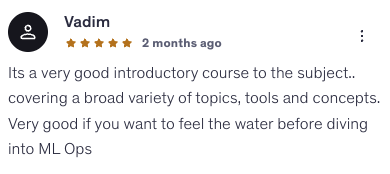
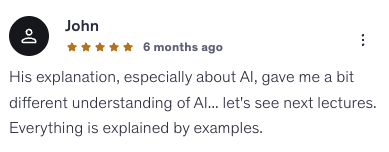
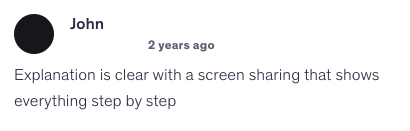
⭐⭐⭐⭐⭐   Verified student reviews – 100% five-star

  • 5-star student review screenshot 🔍 View
  • 5-star student review screenshot 🔍 View
  • 5-star student review screenshot 🔍 View
  • 5-star student review screenshot 🔍 View
  • 5-star student review screenshot 🔍 View
✕ ‹
›

Enroll today

Everything you need to write production-grade Python for MLOps

One payment. 2 years access. 13 modules covering the advanced Python patterns used in real production ML platforms and senior-level codebases.

  • 🎬
    31 Lectures · 2+ hours of video Stream on any device. Rewatch at your pace.
  • 💻
    Dedicated GitHub project Production-style advanced Python code to explore, clone, and reuse.
  • 🌐
    ML API module – Flask + FastAPI Build a complete model serving API from scratch with production best practices.
  • 💬
    Lesson-level Q&A access Ask questions on any lesson – answered in context by the instructor.
  • 🌐
    English subtitles Full subtitle support for non-native English speakers.
  • 🏆
    Certificate of Completion Share to LinkedIn and CV. Advanced Track credential for the MLOps Specialization.
Advanced Python for MLOps · Advanced Track
€ 129,00
One-time payment  ·  2 years access with extension available
ℹ️ Price shown excludes VAT. Applicable VAT is calculated and added automatically at checkout based on your location.
Enroll Now — Get Instant Access
Secure checkout · Instant access after payment
  • ✓ 31 lectures · 2h+ video
  • ✓ Dedicated GitHub project
  • ✓ Flask + FastAPI ML API module
  • ✓ Certificate of Completion
  • ✓ Lesson-level Q&A
  • ✓ 2 years access
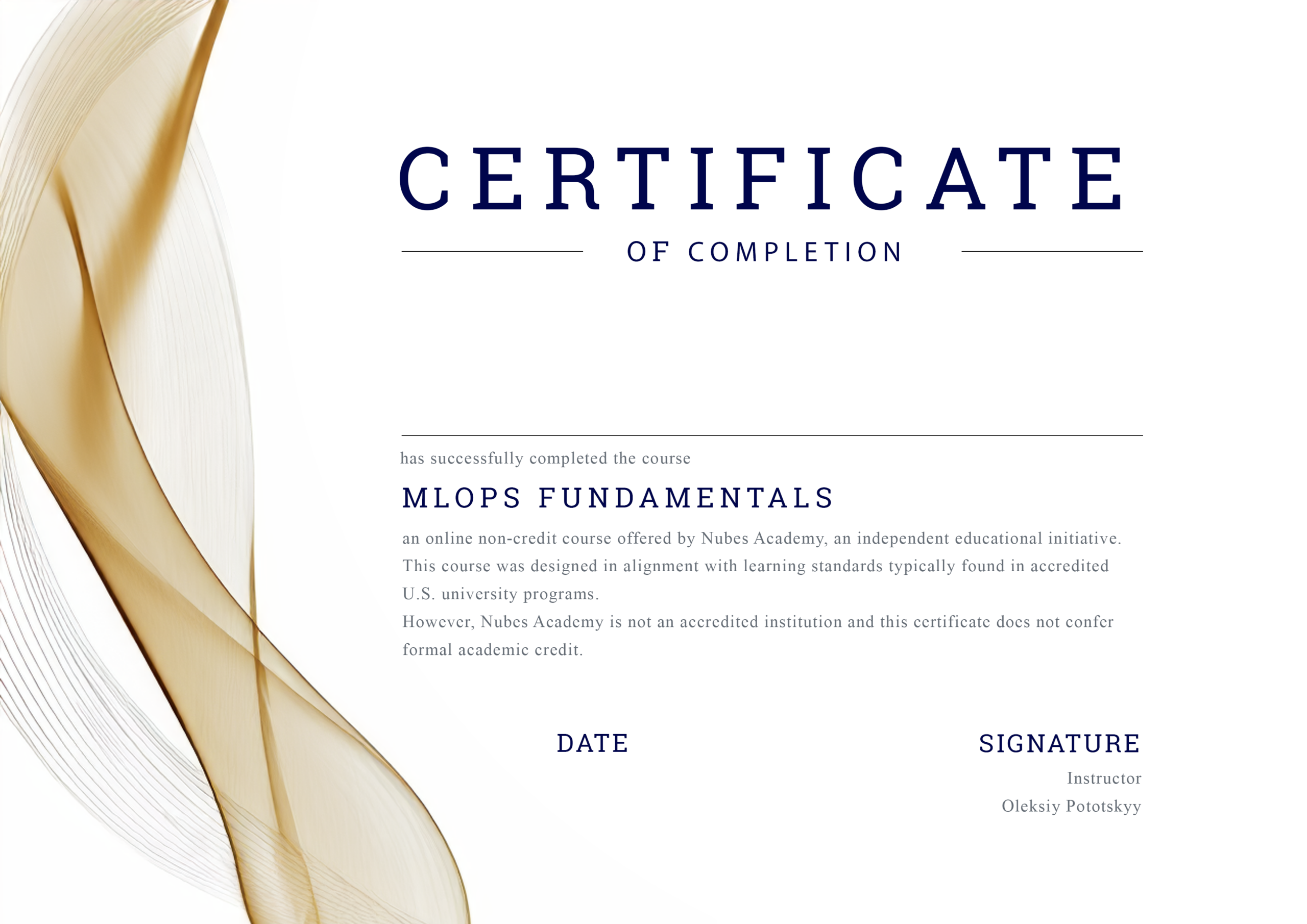
Advanced Python for MLOps - Certificate of Completion

Course credential

Certificate of Completion

Complete the course and earn a Certificate of Completion in Advanced Python for MLOps – shareable directly to your LinkedIn profile and CV. For engineers building a case for a senior role or promotion, demonstrating advanced Python skills in production ML contexts is a credible differentiator.

This certificate is part of the Advanced Track of the MLOps Specialization. Nubes Academy is developing university accreditation partnerships for the full specialization – the credentials you build today are designed to grow into something recognized beyond a standard online course certificate.

🐍 Advanced Track · MLOps Specialization Complete the core specialization and advanced track courses to build a comprehensive, verifiable MLOps credential portfolio.
Alex Pototskyy - Founder, Nubes Academy

Your instructor

About Your Instructor

Alex is an Independent Consultant with 20+ years of experience across Software development, DevOps, Architecture, and technical leadership. He developed and delivered Cloud & DevOps curriculum at Master’s Degree level at a university, and continues to work as an active practitioner alongside building Nubes Academy.

What makes Alex’s approach different: his courses are built from data, not assumptions. The MLOps Fundamentals curriculum was designed by analysing what MLOps engineers actually do in production, not by following a generic textbook outline. The result is a course that covers what your future employer expects, explained in a way that makes sense if you already think like an engineer.

If you have a background in IT, and you want to understand where ML fits into the systems you already work with – this course was built for exactly where you are.


Got questions?

Frequently asked questions

You need solid Python fundamentals — functions, classes, modules, basic file operations, and familiarity with pytest. Python for MLOps (Course #2) fully covers this prerequisite. If you’ve completed that course or have equivalent experience from work, you’re ready. If Python is still new to you, start with Course #2 first — this course won’t re-explain the basics.
This is an optional advanced course — it’s part of the MLOps Specialization’s advanced track but not in the core numbered progression (Courses #1–#8). You can take it any time after Python for MLOps (Course #2), alongside or after any core specialization courses. It doesn’t block access to other courses and isn’t required to earn the specialization certificate.
The concurrency module covers threading and multiprocessing as the primary patterns for ML pipeline parallelism, plus subprocess management and synchronized queues. Asyncio is not a dedicated module in this course — it appears in context where relevant (FastAPI uses async patterns internally). If you specifically need deep asyncio coverage, that would be a separate focused course.
The ML APIs module (Module 13) walks through building a real ML serving endpoint with both frameworks — Flask and FastAPI — from introduction through to API best practices. It’s a complete module, not a surface overview. You’ll understand how to structure a model serving API, handle requests and responses, and apply the design patterns that production ML APIs use. It doesn’t cover deployment or containerisation of those APIs — that’s covered in CI/CD for MLOps.
The course contains 31 lectures and 2+ hours of video. The content is dense — each module covers advanced patterns that require practice. Most experienced engineers complete it in 2–3 weeks studying a few hours per week. You have 2 full years of access, so you can also work through specific modules when they become directly relevant to your work. Extension available if you need more time.
No overlap — this course starts where Python for MLOps ends. Where Python for MLOps covers basic logging, this course covers logging handlers and structured logging. Where Python for MLOps covers basic serialization (JSON, YAML, Pickle), this course covers Parquet, HDF5, and memory-mapped files. Where Python for MLOps covers pytest basics, this course covers fixtures, mocks, and patches. The two courses are designed as a progression, not a repetition.
Yes. We offer team licenses for 5–20 engineers with a manager progress dashboard and kickoff session. This course is particularly well suited for team upskilling — when senior engineers share the same vocabulary around concurrency, packaging, and API design patterns, it meaningfully improves code quality and code review efficiency. Contact [email protected] for team pricing.
Yes — the introduction video is available free on this page and on the Nubes Academy YouTube channel. If you have specific questions about whether this course is the right fit for your current Python level, email us directly — we’ll help you decide whether to start with Python for MLOps first or jump straight into this one.

Still have questions? Email us directly — we reply within 1–2 business days.

It’s not just skills. It’s your next chapter.

Stay ahead

New courses.
Better price.
Subscribers first.

  • Subscriber-only discount on every new course in the MLOps Specialization – before public launch price applies
  • Early access to new courses when they go live.
  • MLOps job market insights – what skills employers are actually hiring for, based on real job description data
  • Practical guides & free content – no noise, only what matters for engineers moving into MLOps

Get early access & subscriber discounts No spam. Unsubscribe any time.

Subscription Form

Your data is stored securely and never shared with third parties.  ·  Privacy Policy